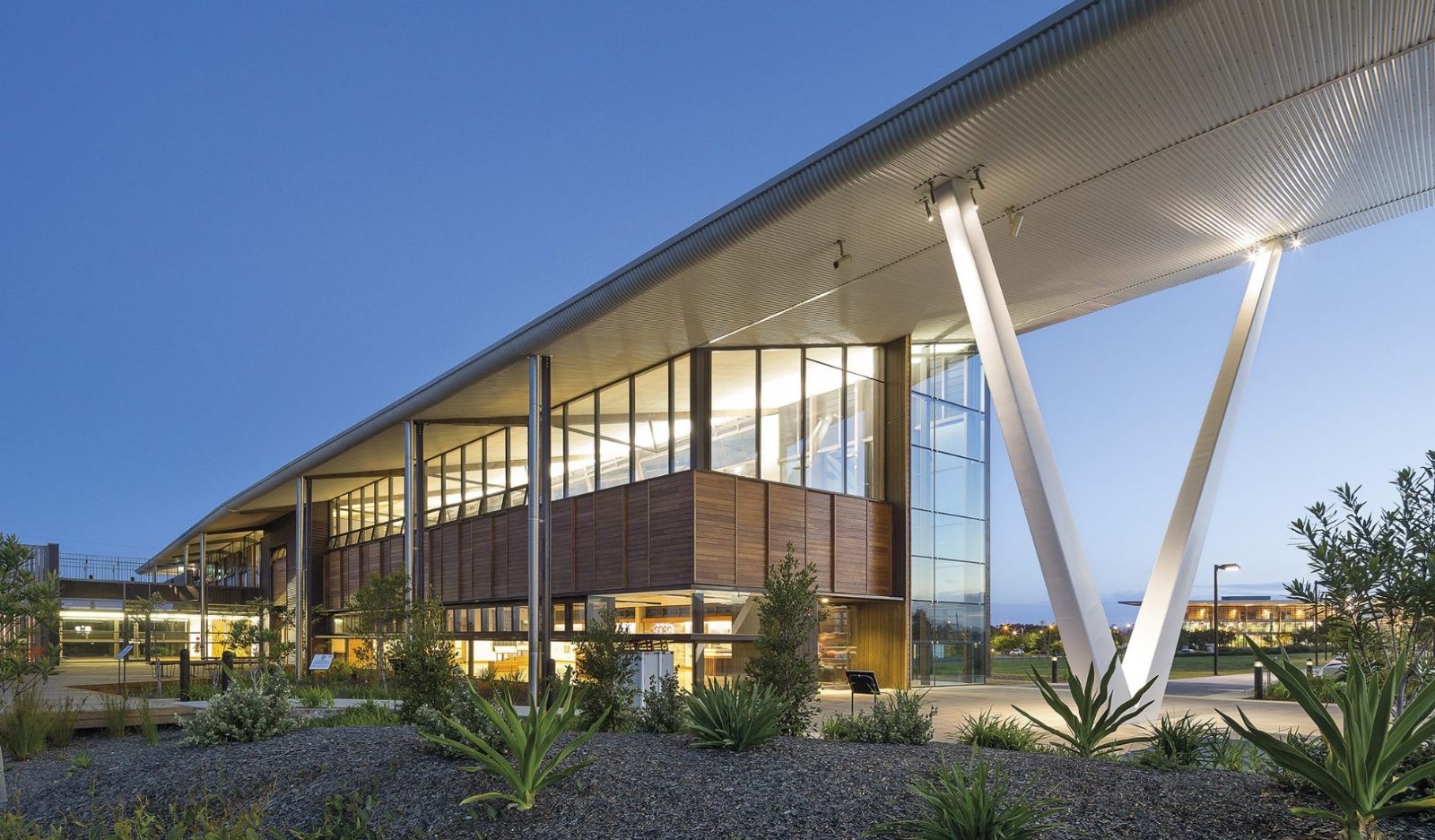
Wetherill Park sits at the strategic centre of Greater Western Sydney’s industrial evolution. With direct connectivity to the M4, M7, and M5 motorways, it’s the distribution gateway to Port Botany, Sydney Airport, and the emerging Western Sydney Airport at Badgerys Creek.
As Sydney’s population pushes toward 7.1 million by 2041, the demand for sophisticated warehouse and manufacturing space in this precinct has intensified dramatically.
The evolution here also reflects a broader shift toward brownfield revitalisation and environmental responsibility. Projects like the McKay Close industrial precinct have transformed former landfill sites into 20,000 square meters of prime industrial floor space through rigorous site remediation and structural engineering.
This kind of complexity requires a steel fabricator who understands both the nuanced requirements of modern Australian building codes and the specific constraints of working in an active industrial basin.
Performance in the mechanical properties of the steel sections
Structural steel is favoured in Wetherill Park for its tensile strength, durability, and adaptability. These attributes allow for the expansive clear-span environments essential for modern logistics operations. Unlike concrete or timber, steel provides a predictable and uniform response to both static and dynamic loads, making it the ideal substrate for high-clearance warehouses and heavy manufacturing plants.
At Steel Fabrication Services, our inventory includes the full range of standardised steel sections that serve as primary structural members for complex industrial builds: Universal Beams (UB) for horizontal portal frame members optimised for bending resistance, Universal Columns (UC) for vertical support in high-bay racking systems, Parallel Flange Channels (PFC) for bracing and mezzanine floor joists, and various hollow sections (SHS, RHS, CHS) for compression members, trusses, and specialised support infrastructure.
The atomic-level composition of these materials (particularly carbon steel) is engineered to resist dislocation under significant stress. For specialised environments like food processing plants or chemical storage facilities, we also work with alloy steels, including stainless steel, to prevent corrosion and maintain hygiene standards.
Engineering standards aren’t optional
For any industrial project in Wetherill Park, compliance with Australian Standards is the baseline for both legal viability and structural performance. We adhere strictly to AS 4100 for steel structure design and AS/NZS 5131 for fabrication and erection quality.
AS 4100 provides the design mandate, utilising limit state methodology to evaluate the capacity of steel members under various conditions. For the vast spans typical in Wetherill Park’s logistics hubs, AS 4100 defines the sizing rules and throat thickness requirements for welded connections, ensuring that the load path remains continuous and secure.
AS/NZS 5131 governs the practical execution through its Construction Category (CC) system, which scales quality control based on the risk associated with structural failure. SFS typically operates within CC2 and CC3, where requirements for material traceability, welder qualification, and non-destructive testing are significantly elevated. By engaging an SFC-qualified fabricator, you mitigate the risk of project delays and ensure the final structure meets the rigorous demands of Sydney’s building codes.
Custom fabrication vs. pre-engineered systems
In Western Sydney’s competitive industrial landscape, developers often face a choice between Pre-Engineered Metal Buildings (PEMB) and custom structural steel solutions. While PEMBs offer speed and standardised efficiency, the unique constraints of Wetherill Park projects often demand a bespoke approach.
Pre-engineered buildings are factory-fabricated according to predetermined specifications, making them suitable for simple warehouses where cost and speed are primary drivers. However, they offer limited flexibility for future modifications. Once manufacturing is complete, adjusting the structure to accommodate new machinery, mezzanine levels, or expanded loading docks becomes technically challenging and expensive.
Our custom structural steel allows for unparalleled design flexibility. This approach is essential for projects with irregular geometries or facilities that must integrate with existing brownfield infrastructure. Key advantages include load optimisation for specific point loads of heavy machinery or gantry cranes, future-proofing through frameworks that can be easily modified as operational needs evolve, and site integration tailored to unique constraints like the remediation requirements of brownfield sites where foundation stability may be variable.
Precision workshop and advanced 3D technology
Our reputation as a reliable partner is built on advanced workshop capabilities and the integration of cutting-edge technology throughout the fabrication lifecycle. The transition from 2D drawings to sophisticated 3D modelling has revolutionised the accuracy with which industrial frameworks are produced.
Using advanced 3D technology, we provide clients with a “digital twin” of their project before any steel is cut. This process involves creating detailed shop drawings, erection plans, and isometric details of complex connections. The primary benefit is clash detection. By modelling the structural steel alongside MEP services, we identify and resolve spatial conflicts that would otherwise lead to expensive on-site modifications.
The physical fabrication process is characterised by millimetric accuracy. Our workshop utilises high-capacity band saws and CNC automation for precise cutting of universal beams and columns. For intricate components, thermal cutting methods like plasma or laser cutting achieve clean, sharp edges on steel plates. When projects require curved sections or non-standard angles, specialised press brakes and rolling machinery apply immense force to shape material without compromising its inherent strength. This precision ensures components arrive on-site “puzzle-ready,” fitting together with minimal on-site adjustment, critical when working within the tight construction windows typical of the Wetherill Park precinct.
Welding, quality control, and corrosion protection
Welding forms the permanent bonds that allow the structure to act as a single, cohesive unit. At SFS, the welding process is governed by a strict quality management system ensuring compliance with AS/NZS 1554. We utilise MIG welding for high-speed efficiency in most structural frameworks, TIG welding for high-precision tasks like architecturally exposed connections, and SMAW for on-site welding where portability is essential.
Quality control measures include dimensional checks to verify every component matches the 3D model, plus non-destructive testing to identify hidden flaws within weld metal. Techniques like ultrasonic testing and magnetic particle inspection provide assurance that structural joints can withstand dynamic loads and traffic-induced vibrations common in industrial manufacturing environments.
For corrosion protection, we provide surface treatments in accordance with AS/NZS 2312.1. Wetherill Park typically falls into C2 or C3 corrosivity categories, though manufacturing plant interiors may have their own micro-climates requiring more robust protection. Our options include Zinc Phosphate Priming for standard applications, Hot-Dip Galvanising for outdoor elements like stairs and walkways, and Powder Coating for durable, UV-resistant finishes.
Quality structural steel fabrication, Wetherill Park
Wetherill Park’s infrastructure must be built to the highest standards of engineering excellence. Steel Fabrication Services offers the capability, scale, and reliability needed to support the next generation of industrial projects in Western Sydney. We ensure every project is delivered on time, on budget, and to the quality that high-pressure industrial environments demand. Let’s chat today.
Phone: 1800 551 296