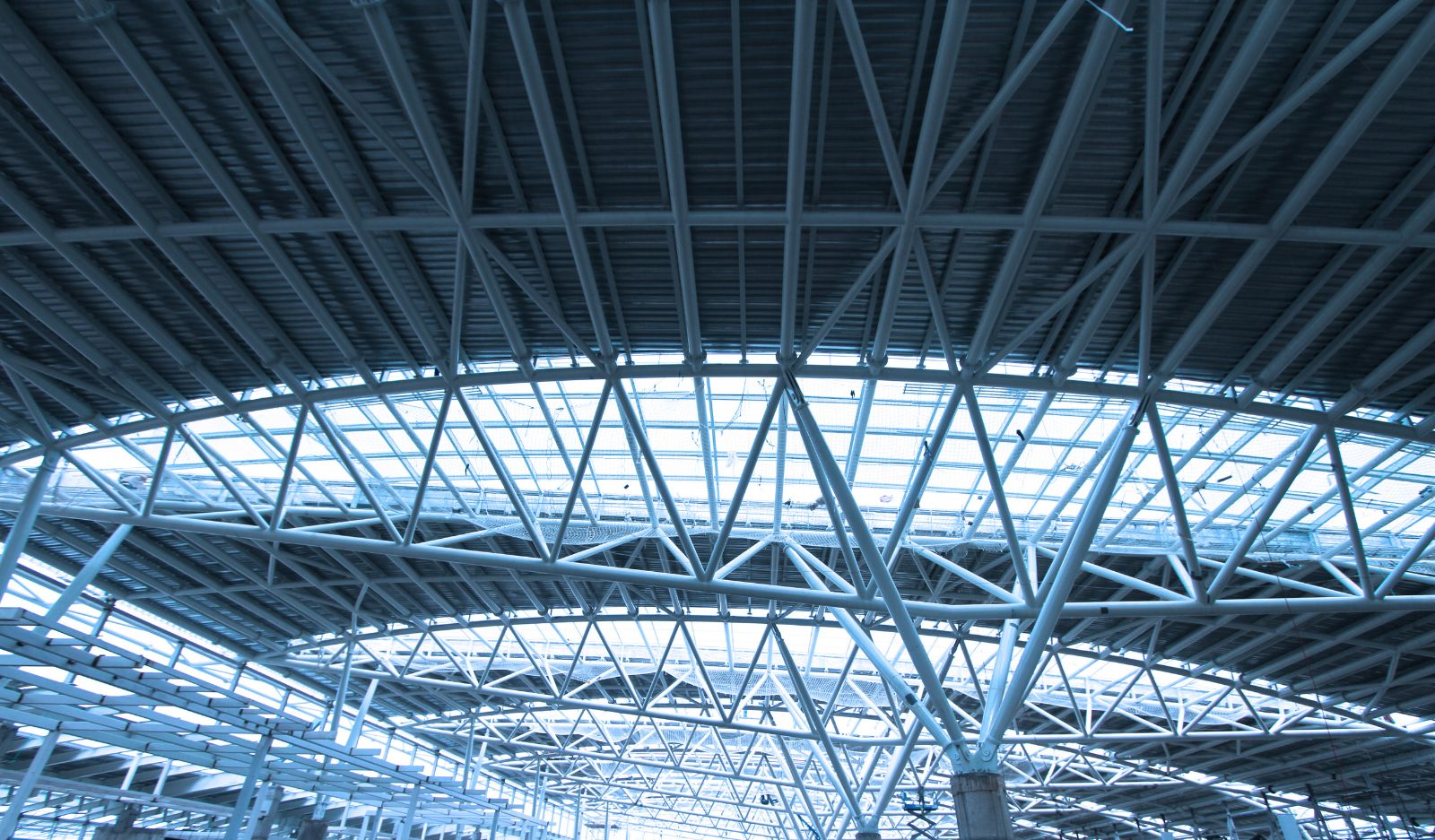
Building in South-West Sydney right now means working with clients like freight operators, e-commerce fulfilment centres, transport and logistics companies and others who are specifying buildings with serious structural demands.
When the steel doesn’t fit or doesn’t meet compliance, the whole project stalls. Pre-commitment rates are running at 63% for upcoming supply, so a stalled project isn’t just your problem; it’s your client’s, your tenant’s, and suddenly everyone’s having a very uncomfortable conversation.
Getting your fabrication right from the start is the difference between a project that runs and one that doesn’t. Let’s see how to make sure all boxes are ticked.
Compliance is more complex than it used to be
Structural steel in Australia is governed by two primary standards: AS 4100, which covers the design side, and AS/NZS 5131, which governs fabrication and erection. The latter introduced a Construction Category system (CC1 through CC4) that determines exactly what level of quality control, documentation, and independent inspection is required based on the risk profile of the structure.
Most commercial and industrial warehouses in the South-West corridor fall under CC2. This is a system that mandates full material traceability, qualified welding procedures, and non-destructive testing. More complex projects, like major transport infrastructure or high-clearance facilities with significant public exposure, can push into CC3, where the requirements become considerably more stringent, and ISO 3834 compliance comes into play.
Getting the Construction Category wrong during the design phase can go two ways, and neither is great. Under-specify, and you’re looking at safety risks and potential legal liability. Over-specify, and you’ve inflated your costs unnecessarily. Neither outcome does your project or your reputation any favours.
At Steel Fabrication Services, we work within the National Structural Steelwork Compliance Scheme (NSSCS) framework as a priority. Every section we build is sourced from certified mills with verified test certificates. Non-compliant imported steel is a genuine risk to project timelines and structural integrity, so the right documentation trail is the foundation of a “no evidence, no install” protocol that Tier 1 and Tier 2 contractors across the region are increasingly demanding.
Precision starts in the model, not on the site
Steel fabrication has changed a bit over the past decade. Some of the modernisation we’ve seen and implemented includes a move to BIM-integrated detailing. This has changed what “precision” actually means in practice.
We use 3D modelling to Level of Development 400 (LOD400), which means every nut, bolt, washer, and weld is modelled to precise geometric specifications before a single piece of steel is cut. The model becomes the single source of truth. Changes made during design are automatically reflected in drawings, material schedules, and CNC cutting files, and the scope for human error shrinks dramatically.
For project managers, coordinating the steel model with architectural and MEP models means potential conflicts are identified and resolved in the virtual environment, not on site.
The isometric details that come out of this process also accelerate RFI approvals and give installation teams clarity on complex connection points. On a dense industrial site in Ingleburn or Minto where space for on-site modification doesn’t exist, that upfront precision is worth its weight in, well, steel.
A product range built for heavy industrial work
We fabricate and supply the full suite of structural sections, including universal beams and columns for primary framing, parallel flange channels for joists and bracing, square and rectangular hollow sections for trusses and gantry systems, circular hollow sections for columns under multidirectional loading, and equal and unequal angles for connections and architectural details.
All drilling and plating are completed in-house, so components arrive on site ready to connect. We also handle the steelwork that often causes headaches for project managers: custom-built industrial staircases, handrails, and balustrades, all fabricated to meet Australian safety and accessibility codes. Having the primary structure and the secondary components come from the same workshop is logistically simpler, ensures architectural consistency, and makes surface treatment coordination far more straightforward.
Let’s talk logistics
Fabricating steel to exact tolerances is only half the equation. Getting it to the site on time, in the right sequence, without creating a logistics nightmare is the other.
Our deliveries work on a Just-in-Time model, which means coordinating dispatch with the planned erection sequence to eliminate the need for on-site stockpiling. On most modern industrial builds, the building footprint covers most of the available land, so our model is a huge benefit.
We conduct Vehicle Swept Path Assessments to confirm that 12.5-metre heavy rigid vehicles can safely enter and exit each site without mounting kerbs or causing damage, and have 4D BIM sequencing, which allows the installation team to plan crane positioning and delivery schedules before anyone sets foot on site.
Working with precision steel fabrication for builders
South-West Sydney is building fast, and the projects are getting more complex. Builders and contractors who want to stay ahead of the curve need a fabrication partner who brings more than just steel to the table. At Steel Fabrication Solutions, we offer technical capability, compliance expertise, digital precision, and the logistical coordination to keep a project moving even when conditions are tight.
We do all of this from our Ingleburn workshop as well. If you’re working in the corridor and need a fabricator who understands what’s at stake, it’s worth having a conversation with our expert team before the next tender lands.