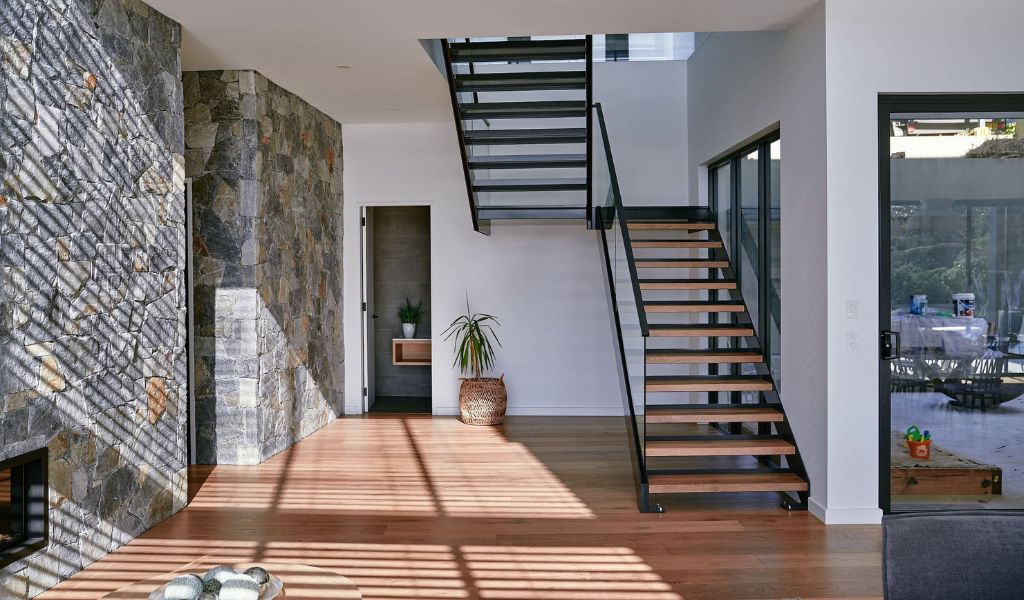
If you’re a builder, architect, or project manager working on construction projects around Sydney, you’ve probably had this debate more than once: steel or timber for staircases?
On the surface, timber looks like the winner as it’s often 10-20% cheaper upfront and has that warm, classic appeal. But that initial saving can quickly disappear when you factor in what happens after installation.
Looking beyond the price tag
Timber framing typically comes in cheaper at the start. But if you’re managing commercial projects or high-end residential builds, you need to think about the total cost of ownership over the building’s lifetime, not just the initial outlay.
Timber staircases need constant attention. Regular resealing, refinishing to handle scratches and water damage, and ongoing pest inspections (because Sydney’s termite population is significant). Each maintenance cycle means disrupting the building, closing off areas, and spending money on materials and skilled labour.
With steel, once it’s in, it’s basically set and forget. A periodic wipe-down with soapy water for powder-coated finishes, maybe an occasional protective treatment, and you’re done. For commercial spaces where downtime equals lost revenue, this difference is massive. The operational savings alone can flip the equation, making steel the more economical choice over time.
Structural steel staircases are nearly five times stronger than equivalent concrete or timber designs
This is critical for high-traffic commercial environments, industrial settings, or anywhere you need to reliably support heavy equipment and constant foot traffic.
Steel’s strength-to-weight ratio means you can handle heavier loads without bulking up the structure. This creates opportunities for architectural flexibility that timber simply can’t match. Steel makes a range of designs possible while maintaining structural integrity with minimal bulk. In commercial developments, every square meter of usable floor space directly impacts rental yield and property value. Steel’s minimal structural footprint is a financial smart play.
Sydney’s climate isn’t timber’s best friend at all
Sydney’s environment features moisture fluctuations, temperature swings, and our enthusiastic pest population, and this creates specific challenges for building materials. Timber is susceptible to warping, splintering, and rotting over time. It needs constant vigilance against degradation.
Steel, particularly when properly treated or galvanised, offers inherent resistance. It won’t warp in humidity, won’t rot, and termites have absolutely zero interest in it. If you’ve dealt with termite damage in NSW, you know the ongoing cost and stress of managing that risk with timber structures. Steel eliminates that concern entirely.
The compliance difference for fire and accessibility
If you’re working on projects with more than two storeys, you’re dealing with strict National Construction Code requirements around fire resistance.
Steel is inherently non-combustible, and it won’t burn or release toxic fumes in a fire. Achieving required Fire Resistance Levels typically involves applying intumescent coatings, which is a predictable, auditable process. The coating application is regulated, with specific Dry Film Thickness requirements verified through testing. It’s a slightly higher cost, but the pathway to certification is crystal clear.
Timber’s pathway is more complex. You’re either relying on high-density Australian hardwoods (Durability Class 1, like Blackbutt or Ironbark) or chemical fire treatments. Both options introduce variables like long-term chemical integrity, potential delamination of glued members under heat, and density consistency. For building surveyors and certifiers, steel provides much greater confidence and a clearer audit trail.
For accessibility, AS 1428.1:2021 sets incredibly stringent dimensional requirements for staircases (handrail heights between 865-1000mm, specific graspable profiles, precise wall clearances). Non-compliance is a potential breach of the Disability Discrimination Act.
Custom steel fabrication, driven by computer-controlled processes, delivers the millimetre precision needed to meet these standards. The structural rigidity allows precise handrail geometry and load capacity specifications. Timber construction often relies more heavily on site-based manual labour and joinery, which increases the risk of dimensional non-conformance during final inspection.
Prefabrication speeds up timelines
One of steel’s biggest advantages doesn’t even happen on your construction site; it’s the controlled workshop environment where prefabricated components are manufactured.
Custom steel staircases arrive on site measured, cut, welded, and finished to exact specifications. They’re installation-ready. This eliminates the quality risks and weather delays associated with on-site fabrication, and it dramatically speeds up assembly.
Prefabricated steel stairs can be installed early, often concurrent with initial structural steel erection. This means you get safe, certified access for subsequent trades immediately, eliminating risky temporary access solutions and improving overall site safety.
Choosing the right steel fabricator
The material choice matters, but equally important is partnering with a fabricator who meets professional standards. Here’s what to verify:
- Your fabricator should demonstrate adherence to AS/NZS 5131 (Structural Steelwork – Fabrication and Erection) and AS/NZS 4100 (Steel Structures). These are your risk management tools that streamline certification and reduce liability.
- Look for comprehensive Quality Management Systems covering both Quality Assurance (preventative practices throughout fabrication) and Quality Control (final inspections, non-destructive testing, welding inspections). This ensures traceable documentation that building surveyors value.
- Advanced equipment like CNC machinery, laser cutting, and automation indicates a commitment to the precision required for modern architectural demands and mandatory dimensional compliance.
- For heavy structural components, choosing a Sydney-based fabricator is financially smart. Local sourcing significantly reduces transport costs and ensures immediate access for site-specific questions or resolutions, preventing costly schedule delays.
- The best fabricators offer complete oversight from design detailing and drafting through logistics and final installation. This single point of accountability, led by experienced project managers, is vital for transparent communication and cost control.
Choosing quality steel fabrication services for Sydney projects
Steel delivers a number of beneficial factors that consistently outweigh timber’s modest initial cost advantage. For Sydney builders, architects, and project managers working on projects where certainty matters, compliance isn’t negotiable, and downtime is expensive, steel staircases fabricated by experienced local specialists like Steel Fabrication Services offer the most reliable path to successful project delivery.
We bring technical excellence, modern construction technology integration, and professional coordination to every project. You get durable, certifiable, and architecturally superior results as a result. Let’s get started on your project today.