Steel Fabrication Services is a Sydney-based steel fabricator providing structural steel fabrication, supply, delivery and installation for residential, commercial and industrial projects across Sydney and NSW. We work with builders, engineers, architects and project managers to fabricate steel components accurately, safely and on schedule.
Why Coastal and Port Infrastructure Needs Corrosion-Resistant Steel
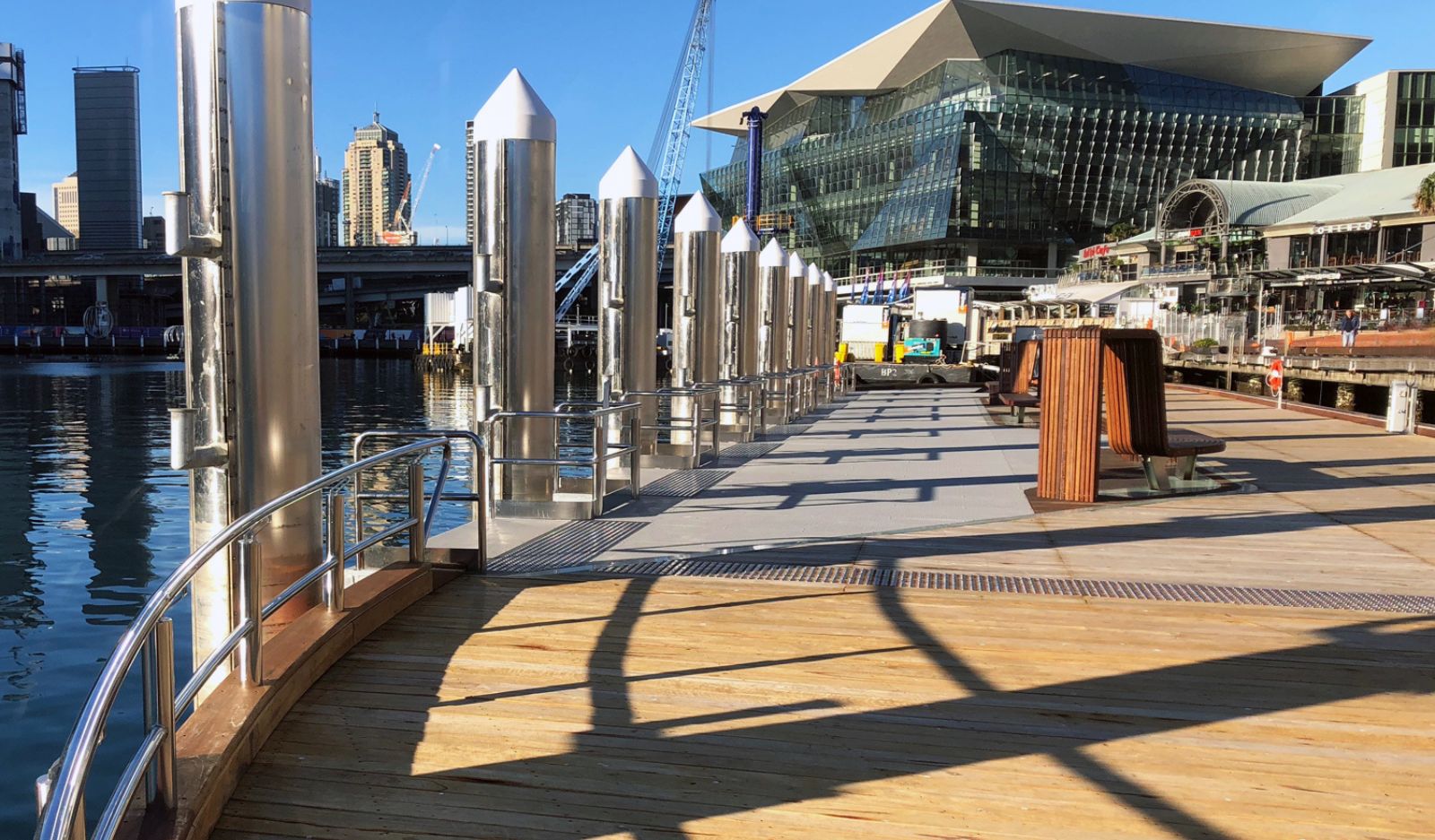
Salt-laden air, tidal movement, high humidity, and wind-driven chloride deposits create one of the harshest working environments for structural steel. Around Botany, Port Botany, and Sydney’s coastal infrastructure zones, steel is exposed to constant corrosion pressure.
That is why marine-grade steel fabrication is critical for port, coastal, industrial, and infrastructure projects across Sydney and NSW. At Steel Fabrication Services, we fabricate structural steel components with the coastal environment in mind, from material selection and welding quality through to surface treatment, delivery, and installation support.
For builders, engineers, and project managers working near Botany Bay or Sydney’s port precincts, the goal is simple: steelwork that is built accurately, protected properly, and made to perform in demanding marine conditions.
Marine-Grade Steel Fabrication for Port Botany Infrastructure Projects
The Quayline Equalisation Project is designed to extend the southern quay of Brotherson Dock by 314 metres. The goal is to give all three stevedore companies the ability to berth longer vessels simultaneously, keeping pace with the new generation of super-sized container ships that are becoming the global norm.
This involves thousands of tonnes of structural steel: quay wall reinforcements, heavy-duty piles, mooring bollards, and a whole lot of fabricated components that need to resist the extreme salinity of Botany Bay for decades.
Then there’s the Stage Two On-Dock Rail Investment Program (including the Sydney Autostrad Botany Rail Expansion), which is set to double DP World’s rail capacity to one million TEUs per annum. Five new 600-metre rail sidings, bridge works, culverts, all demanding structural steel that can handle the unique microclimate of a working port, where wind-driven salts pile up on sheltered surfaces that never get the benefit of a good rain wash.
Choosing the Right Marine-Grade Steel for Sydney Port Projects
The single biggest determinant of how long a marine asset lasts is the steel grade specified at the design stage. In the Sydney coastal environment, ISO 9223 typically classifies corrosivity at C4 (High) or C5 (Very High), with some outer port and surf-exposed locations hitting CX (Extreme). In practical terms, this rules out standard carbon steel and even Grade 304 stainless steel for most structural applications. You need to go further.
Grade 316 Stainless Steel for Marine and Coastal Applications
The go-to for marine applications because of molybdenum, specifically the 2–3% added to the alloy that you don’t get in Grade 304. Molybdenum strengthens the passive chromium oxide layer that protects the steel from attack, and critically, boosts resistance to pitting and crevice corrosion, which are the two failure modes that do the most damage in chloride-rich environments.
Engineers often use the Pitting Resistance Equivalent Number (PREN) as a comparative guide when assessing stainless steel grades for chloride-rich environments. Grade 316/316L generally has a higher PREN range than Grade 304, mainly because of its molybdenum content. While PREN is useful for comparing pitting resistance, final material selection should still consider exposure level, design life, maintenance access, fabrication method, and the advice of the project engineer.
Duplex 2205 Steel for High-Strength Port Infrastructure
This grade features a dual-phase microstructure (roughly half austenite, half ferrite) that delivers yield strength approaching 450 MPa, which is nearly double what you’d get from the austenitic 300-series grades. That means you can often use thinner sections, saving material without compromising performance.
The resistance to stress corrosion cracking is also superior, which matters in infrastructure where you can’t afford unplanned downtime. The trade-off is cost and machinability, as 2205 is harder and gummier to cut than standard grades, and it requires specialised consumables and adjusted cutting speeds.
Australian Standards for Marine-Grade Steel Fabrication
In marine-grade steel fabrication, a weld that looks perfect to the naked eye can fail within months if it hasn’t been executed to the right standard. There are two key Australian Standards that govern this work:
AS/NZS 1554.6 for Stainless Steel Welding
This covers the welding of stainless steel structures. For port infrastructure subject to the rhythmic vibrations of freight trains or heavy crane cycles, welds need to be categorised as Category FA (Fatigue Applications) to prevent crack propagation over time. The standard also mandates the removal of all heat tint, which is the iron-rich oxide layer that forms during welding and depletes the underlying steel of chromium, leaving a zone that’s highly vulnerable to corrosion.
AS/NZS 4680 for Hot-Dip Galvanised Steel Protection
This governs hot-dip galvanising for carbon steel, and it’s the go-to protection method when stainless isn’t commercially viable. After-fabrication hot-dip galvanising is significantly superior to pre-galvanised sheet for complex structural components. It coats internal surfaces, hollow sections, and intricate joints that surface treatments can’t reach. For steel thicker than 6mm, the standard requires a minimum average coating of 85 microns, providing a robust metallurgical bond between zinc and steel that won’t delaminate under impact or thermal cycling.
Protective Coating Systems for Sydney Marine Environments
Duplex Coating Systems for C4 and C5 Corrosion Zones
For environments too aggressive for galvanising alone, which in the Sydney context means C5 zones and anything in direct surf exposure, the engineering solution is a Duplex coating system: high-performance paint over hot-dip galvanised steel.
The synergy between the two is multiplicative. The paint protects the zinc from premature breakdown, and the zinc acts as a sacrificial backup if the paint takes a knock. A properly specified Duplex system can achieve a life-to-first-maintenance of over 25 years in C4 and C5 environments.
Epoxy and Polyurethane Coatings for Long-Term Steel Protection
For new port infrastructure, a well-established three-coat system typically involves an epoxy zinc-rich primer for sacrificial protection at the base, a high-build epoxy intermediate for environmental barrier performance, and a polyurethane topcoat for UV resistance and long-term gloss retention.
Surface Treatment for Port, Wharf and Coastal Steelwork
For high-traffic wharf applications, surface-tolerant epoxies can be applied and cured quickly, getting infrastructure back into operation within hours rather than days.
Marine-Grade Structural Steel Fabrication for Builders, Engineers and Contractors
Steel Fabrication Services supports builders, engineers, project managers, and contractors with structural steel fabrication for coastal, industrial, commercial, and infrastructure-related projects across Sydney and NSW.
From fabricated beams, brackets, frames, platforms, supports, and access structures through to surface treatment, delivery, and installation coordination, we help project teams get steelwork fabricated accurately and prepared for demanding site conditions.
Phone & Fax: 1800 551 296 Email: info@steelfabricationservices.com.au